
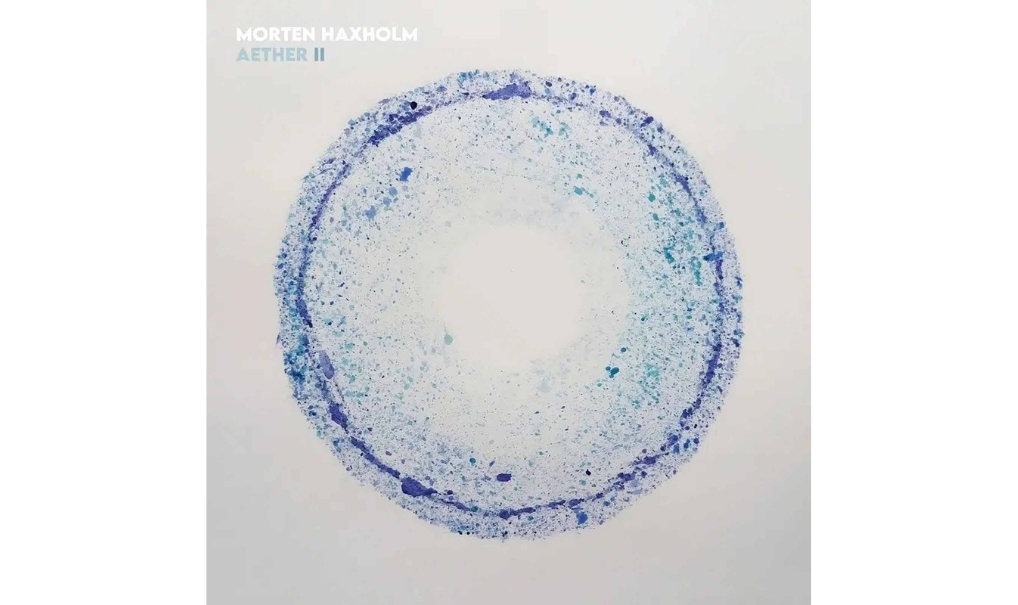
AETHER II unfolds with quiet space and subtle shifts, its melodies and moods crafted with a tenderness that lingers—music that invites close listening and stays with you long after it ends.
Zack’s Music
Morten Haxholm – Double Bass, Bass Guitar, Composition; Lubos Soukup – Saxophone, Clarinet; Rasmus Oppenhagen Krogh – Guitar; Nikolaj Hess – Piano, Rhodes; Jakob Høyer – Drums; Tomasz Dabrowski – Trumpet; Casper Hesselager – Wurlitzer, Audio Processing, Modular Synth
With AETHER II, Danish bassist and composer Morten Haxholm continues the slow-burning exploration he began on AETHER. The focus is still on modern ballads—patient, spacious compositions that unfold gently rather than push forward. This time around, though, there’s a touch more contrast in the dynamics, and the textures feel slightly more layered. Field recordings, soft electronics, and delicate post-production add atmosphere. It’s a restrained, deliberate set shaped by Nordic lyricism and a fondness for subtle shifts over bold moves.
At its core, AETHER II is a meditation on memory—ten original tunes tied to the people, places, and moments that have shaped Haxholm’s life. The album isn’t a backward glance but an inward journey, searching for stillness and surprise in equal measure.
The sound world here is immersive and cinematic, yet never overblown. Opening with the misty intro ‘Abstract,’ the album soon lands on ‘Silveon,’ a track named after a toy belonging to Haxholm’s eldest daughter. The rhythm sways as gently as a cradle—calm, steady, and comforting. Its singable melody feels like it was plucked from a lullaby, with Rasmus Oppenhagen Krogh’s guitar adding a soft shimmer around the edges.
‘Magnolia’ is equally tender. Nikolaj Hess’s piano is elegantly understated—each note feels carefully placed, never rushed. Lubos Soukup’s clarinet brings a wistful, almost melancholic tone, and when paired with Krogh’s guitar, the result is quietly beautiful.
Elsewhere, ‘Coda’ blends nature and technology in a way that feels surprisingly organic. Forest sounds—recorded near where Haxholm’s brother lives—are woven together with hand-played electronic percussion, a quiet tribute to his brother’s interest in experimental music. That kind of personal connection runs through the album. The cover art, made in collaboration with Haxholm’s daughters, reflects this spirit of shared creativity and connection to family and place.
While the pace never rushes, there’s a surprising amount of detail in the playing. Haxholm is stretching the ballad form, giving each tune a distinct shape without breaking the album’s overall calm. ‘Siren Song’ moves with a sunny patience, built around a laid-back sax melody and a light, singing Rhodes solo from Nikolaj Hess. On ‘Winterkeeper,’ the band leans into a steady, rolling groove, with low-register sax lines and unison phrases that build just enough tension without ever boiling over. ‘Elegy’ feels almost ceremonial—slow, muted, and mournful, with gentle piano lines mirrored by the bass and a rhythm that moves like a funeral march. ‘Shimmers’ lives up to its name, with glowing guitar phrases, a deep-toned bass solo, and cymbal work from Jakob Høyer that stays light but expressive.
The closing track, ‘Incarnadine,’ drifts in slowly and never fully settles. Tomasz Dąbrowski’s trumpet plays in a hushed voice—open-toned and evocative—while the piano carries a tender, somber melody in unison. It begins as a solemn hymn but gradually loosens, becoming more atmospheric. Rather than a firm ending, it slips away—less a final statement than a slow fade into the ether.
The band is top-shelf, with longtime collaborators like Lubos Soukup (saxophone, clarinet) and Tomasz Dąbrowski (trumpet) adding depth and nuance to the arrangements. Rasmus Oppenhagen Krogh’s guitar and Nikolaj Hess’s piano weave delicate counterpoints, while Jakob Høyer’s drumming stays just beneath the surface—subtle, textural, and full of restraint. Casper Hesselager’s electronic touches add atmosphere, shifting from cloudy to luminous throughout.
After years in New York, Haxholm’s return to Nordic ballads isn’t about nostalgia—it’s a careful reimagining. AETHER II unfolds with quiet space and subtle shifts, its melodies and moods crafted with a tenderness that lingers—music that invites close listening and stays with you long after it ends.
